





Quick answer: You keep your cryptocurrency safe by doing three things well. First, choose where you store it with care. Second, protect your accounts, devices, recovery phrase and transactions. Third, prepare for the day something goes wrong, from a hack to a lost phone to an unexpected death. No single tool does all three.
In this guide
1. Your cryptocurrency is only as secure as the way you manage it
On 29 October 2026, attackers drained billions of dollars from Binance, the world’s largest crypto exchange. Binance estimates the impact at about $6.3 billion. That figure makes this the largest crypto theft on record. Our full news report on the Binance hack covers the timeline in detail.
This guide does not exist to retell that story. It exists because the story teaches three separate lessons.
- Some risks sit outside your control. An exchange or wallet provider can suffer a breach no customer could have stopped.
- Other risks sit squarely with you. Phishing, account takeovers, malware, fake payment receipts and plain human error all cost investors money every day.
- You can lose crypto without anyone stealing it. A lost recovery phrase, a forgotten password or a missing inheritance plan can lock you out forever.
So the goal is not perfect safety. Nobody can reach that. The goal is to reduce your exposure to risks you cannot control, strengthen the ones you can, and have a plan for when something fails.
INCIDENT UPDATE · 30 OCTOBER 2026
What the October 2026 Binance breach teaches crypto investors
- Size of the loss. Binance estimated the impact at about $6.3 billion. Elliptic counted $6.43 billion at the prices on the day of the theft. TRM Labs counted $6.36 billion, and Chainalysis estimated roughly $5.9 billion. The estimates differ because each firm values assets at different moments and counts different transfers.
- How it happened. Binance’s early findings pointed to a compromised DevOps engineer’s laptop that gave attackers access to a service container. Co-CEO Richard Teng later said the attack was more complex than one employee’s permissions, and that investigators had found further points of breach. Binance said it found no evidence of a wallet private-key leak. Elliptic’s reading is that the attacker got Binance’s own systems to sign the withdrawals.
- Service impact. Binance first suspended deposits and withdrawals. Later updates said deposits were running normally while withdrawals stayed paused during a rebuild of the withdrawal service. Binance said it expected withdrawals to return in about 45 hours.
- Compensation. Binance said it would cover all losses from its SAFU fund and company funds.
- Recovery. Binance reported about $3 billion frozen on-chain. Elliptic verified $2.84 billion, or 44% of the theft, and found that stablecoins made up about 94% of the frozen amount.
- Attribution. Elliptic and Chainalysis both assess that North Korea-linked actors carried out the theft. That is their analysis, and Elliptic itself lists caveats.
The most important lesson is simple. Even when an exchange promises to repay you, a withdrawal freeze can leave you unable to move your money when you need it. A promise to reimburse is not the same thing as access.
This is not an isolated problem
One month earlier, on 24 September 2026, Bitget reported unauthorised transfers from its hot and warm wallets. Bitget first put the amount at about $351.6 million, and further tracing raised the figure to about $387.5 million. Bitget said the affected wallets were exchange-controlled custodial wallets. Its separate self-custody product, Bitget Wallet, was not hit. Our Bitget hack report explains the backend wallet attack.
Bybit offers another example. Elliptic puts the 2025 Bybit theft at $1.46 billion, and our Bybit hack report shows how that attack unfolded.
These two incidents do not prove that every exchange is unsafe. They prove something narrower. Exchange-level risk is real, so you should never rely on a provider’s reputation alone.
2. Where should you keep your cryptocurrency? Understanding your custody options
Before you pick security tools, you need to know who controls your coins. That single question shapes every risk you face.
2.1 Keeping crypto on a centralised exchange
On an exchange, the platform holds your private keys. You see a balance in your account, but the exchange controls the coins behind it. This is called custodial storage.
The benefits are real. You get convenience, easy trading, customer support and account-recovery options. The risks are just as real. Exchanges can suffer breaches, become insolvent, face outages and freeze withdrawals. Your account can also get hijacked even when the exchange itself stays secure.
2.2 Using a software wallet
A software wallet, or hot wallet, is an app on your phone or computer, or a browser extension. You hold the private keys, so no exchange can freeze or lose your coins. These wallets work well for everyday payments and DeFi.
Popular examples include MetaMask, Trust Wallet and Coinbase Wallet. MetaMask is a browser-extension and mobile wallet that many Ethereum apps support. Trust Wallet is a mobile wallet that covers many blockchains. Coinbase Wallet is a self-custody wallet from Coinbase, separate from the Coinbase exchange.
The trade-off is exposure. A compromised device, a phishing page, a malicious app or a careless transaction approval can empty the wallet.
2.3 Using a hardware wallet
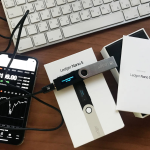
A hardware wallet is a small device that stores your private keys offline. This is what people mean by cold storage. The keys never touch your internet-connected phone or computer, which makes the device a strong choice for long-term holdings. If you are new to the idea, start with our guide to hardware wallets.
Several reputable makers sell them. These are the ones we review on MarketsXplora:
- Trezor: the Trezor Safe 7, Safe 5 and Safe 3. Shop at Trezor.
- Ledger: the Ledger Stax, Ledger Flex and Ledger Nano Gen5. Shop at Ledger.
- Tangem: a card-style wallet that you tap against your phone. Shop at Tangem.
- OneKey: the OneKey Pro and Pro 2. Shop at OneKey.
Disclosure: MarketsXplora earns a commission if you buy through some of these links, at no extra cost to you. Each link goes to the manufacturer’s own store, which is where we tell you to buy.
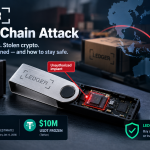
A hardware wallet still has limits. You must protect the recovery phrase. You can still sign a malicious transaction by mistake. A thief can steal the device, and a tampered device can reach you through a supply-chain attack. Our report on the Ledger CryptoBilis supply-chain attack shows why this matters. So a hardware wallet does not make you immune to fraud. Buy only directly from the manufacturer’s official store, never from a reseller or marketplace.
2.4 Which option should you choose?
No option is universally safest. Your best setup depends on how much you hold, how often you transact, how technical you are and how well you can protect recovery information.
Our recommendation: For any amount you cannot afford to lose, use a hardware wallet. Buy it directly from the manufacturer, never from a reseller, a marketplace or a second-hand seller. A device that reaches you through a third party could have been tampered with. Keep only a small working balance on an exchange or in a software wallet for trading and daily use.
Consideration |
Exchange |
Software wallet |
Hardware wallet |
|---|---|---|---|
Who controls the private keys? |
The exchange |
You |
You |
Convenience |
High |
High |
Moderate |
Main security exposure |
Platform and account |
Device and user |
Recovery phrase and transaction approval |
Best suited for |
Trading and liquidity |
Everyday transactions |
Longer-term storage |
Recovery options |
Depends on the provider |
Recovery phrase |
Recovery phrase |
 Where should you keep your cryptocurrency? Three storage options compared by key control, risk and best use.
3. Essential ways to protect your cryptocurrency
Not every security measure carries equal weight. So this section ranks them. Start with Tier 1 today, build Tier 2 into your routine, and add Tier 3 as your holdings grow.
Tier 1: Do these today
3.1 Secure your exchange accounts with strong authentication
Use a unique, strong password on every account. A reputable password manager makes that practical. Then add a second layer of protection.
- Authenticator app: generates a short-lived code on your phone. It beats SMS codes.
- Passkey: replaces the password with a cryptographic login tied to your device. It resists phishing well.
- Hardware security key: a physical key you tap or plug in. It offers the strongest phishing resistance.
- SMS codes: better than nothing, but weaker. Avoid relying on them alone.
Store your backup authentication codes somewhere safe and offline. Also review your active sessions and account-recovery settings so you know which devices can get in.
3.2 Secure the email account behind your crypto accounts
Your email is the master key. Anyone who controls it can click “forgot password” on your exchange and take over the account.
- Give your email a unique password and strong authentication.
- Check the recovery email address and phone number.
- Look for strange forwarding rules and unknown active sessions.
- Stop using any email account you suspect someone has accessed.
3.3 Protect your seed phrase and private keys
A recovery phrase, also called a seed phrase, is a list of words that can rebuild your wallet. It generates your private keys. Whoever holds the phrase controls the wallet, with no password needed.
That is why no legitimate support team will ever ask for it. Anyone who does ask is a scammer.
- Write the phrase on paper or stamp it on metal. Keep it offline.
- Never screenshot it, email it, type it into a notes app or save it to cloud storage.
- Protect the backup against theft, fire and water.
- Enter the phrase only into a trusted wallet during a genuine recovery.
3.4 Protect your phone, computer and SIM card
Your devices run your wallets and approve your logins. Treat them like a vault door.
- Install operating system and app updates quickly.
- Turn on device encryption and a strong screen lock.
- Avoid suspicious apps and browser extensions.
- Never make sensitive transactions on a shared computer.
Your SIM card needs the same care. In a SIM-swap attack, a criminal tricks your mobile carrier into moving your number to a SIM they control. They then receive your SMS codes and reset your passwords. In Nigeria, many bank apps, exchange logins and P2P accounts rely on a phone number, so one swapped SIM can expose several accounts at once. Ask your carrier about extra protection on your line. Then move your accounts away from SMS-based recovery wherever you can.
3.5 Learn to spot suspicious messages and websites
- Check the web address of every exchange and wallet site before you log in. Type it yourself or use a saved bookmark.
- Do not trust a “support” account just because it uses a company logo.
- Skip unsolicited links and attachments.
- Download wallet apps only from the official site or app store listing, and check the developer name.
- Contact support through the official website or app, never through a link someone sent you.
Tier 2: Make these part of your routine
3.6 Verify transactions and wallet permissions before you approve them
Connecting a wallet to a website is not the same as signing a transaction. Connecting lets a site see your address. Signing lets it move your money. So read every prompt before you sign.
- Check the recipient address, the network, the amount and the fee.
- Understand token allowances. An “unlimited approval” lets a contract spend a token from your wallet at any time.
- Review your approvals regularly and revoke the ones you no longer need. Tools such as Etherscan’s token approval checker and Revoke.cash show them.
- Watch for address poisoning and clipboard malware. Always compare the full address, not just the first and last characters.
When you send a large amount to a new address, a small test transaction first is sensible. It confirms the address and network work. It does not remove every risk, so keep checking the details.
3.7 Use exchange security features and choose platforms carefully
Your own password cannot protect you from a breach of an exchange’s internal systems. What you can do is choose the platform carefully and use every protection it offers. When you assess an exchange, look at:
- Whether it holds authorisation from a regulator, and which legal entity serves your country.
- Its security track record and how openly it discussed past incidents.
- Withdrawal controls, such as address allowlisting, and anti-phishing codes.
- Proof of reserves, and what that proof actually covers.
- How it communicates during outages and what it says about compensation after a breach.
Treat regulation, proof of reserves and a clean record as useful signals. None of them guarantees future safety.
3.8 Keep only what you need for active trading on exchanges
The more you leave on an exchange, the more a platform failure can cost you. So treat an exchange as a trading desk, not a savings account. Keep the amount you need for active trades there and no more.
Moving everything into self-custody is not automatically safer, though. If you cannot protect a recovery phrase reliably, self-custody may put your coins at greater risk. Balance convenience against custody risk honestly.
3.9 Protect your privacy and avoid exposing your holdings
- Do not announce how much crypto you own.
- Avoid posting wallet screenshots that show balances or transactions.
- Keep hardware wallet purchases, storage locations and backup arrangements private.
- Be wary of strangers who ask about your holdings.
Crypto security is not only digital. Criminals sometimes target people physically once they learn who holds valuable assets. Privacy protects your safety as well as your wallet.
Tier 3: If you hold significant cryptocurrency
3.10 Consider stronger custody arrangements
- Hardware wallets from reputable manufacturers, bought directly from the manufacturer.
- A passphrase adds an extra word to your recovery phrase. It adds protection, but if you forget it, you lose access for good.
- Multisignature wallets require several keys to approve a transaction. They spread the risk, but they need careful setup and a clear recovery plan.
- Separate backup locations reduce the chance that one event destroys every copy.
- Professional custody or advice may suit very large holdings.
3.11 Test your wallet recovery process
A recovery phrase you have never tested is a hope, not a plan. Follow your wallet maker’s official guidance to confirm that your backup works. Check that every word is complete and readable. Never type the phrase into a website or onto a device you do not trust. Wallet designs differ, so follow the manufacturer’s own steps rather than a generic procedure.
4. How to recognise cryptocurrency scams before you lose money
Section 3 covered what to do. This section covers what scammers do. Learn their patterns and you will spot most attacks early.
4.1 Fake exchange and wallet support
Scammers pose as support staff from Binance, Bybit, Trust Wallet, MetaMask, Ledger and others. Watch for these signs:
- An unsolicited message claiming a problem with your account.
- A request for your recovery phrase or private key.
- A link to a “verification” page.
- A request to install remote-access software.
- Pressure to act right now.
4.2 Fake investment platforms and guaranteed returns
Real investments carry risk. Scams promise otherwise. Be suspicious of daily or monthly returns that look too good, referral-based schemes that pay you for recruiting others, and slick dashboards that show growing profits. The trap closes when you try to withdraw. Then the platform asks for more deposits, fees or taxes to “release” your money. Genuine platforms do not work that way.
4.3 P2P payment-confirmation scams
Peer-to-peer trading is popular across Nigeria and the rest of Africa, and scammers know it. The usual tricks include:
- Fake bank transfer receipts and edited payment screenshots.
- Payments from a third party, which the bank may later reverse or dispute.
- Messages that impersonate the exchange’s escrow support and tell you to release your crypto.
Golden rule for sellers: Never release crypto because of a screenshot or a message. Check your own bank account or banking app and confirm that the money has cleared in your name. Then release the crypto.
4.4 Fake airdrops, giveaways and wallet-draining sites
Scammers advertise free tokens and send you to a fake claim page. The page asks you to connect your wallet and sign a transaction. That signature may hand a malicious contract permission to drain your tokens. Some pages simply ask for your recovery phrase. Real airdrops exist, but you should reach them through the project’s official site, never through a link in a message.
4.5 Address poisoning and impersonation
In an address-poisoning attack, a scammer sends you a tiny transfer from an address that looks almost identical to one you use. The fake address now sits in your transaction history. If you copy it later by mistake, your money goes to the scammer. Always check the full address before you send.
4.6 Fake crypto recovery services
After a loss, people feel desperate, and scammers exploit that. Be alert to guaranteed recovery claims, upfront fees, requests for your seed phrase, claims of special access to blockchain networks, and anonymous “hackers” who say they traced your funds. No one can promise to reverse a blockchain transaction.
 Seven warning signs of a cryptocurrency scam, including a fake P2P payment receipt.
5. What to do if your cryptocurrency is stolen or compromised
Speed matters. Work through the steps below in order.
5.1 If your exchange account is hacked
- Contact the exchange through its official website or app.
- Ask for an account freeze or withdrawal restriction.
- Change your password from a clean, trusted device.
- Secure the email account linked to the exchange.
- Remove suspicious sessions, API keys and authentication methods.
- Review your withdrawal history and record every suspicious transaction.
5.2 If your wallet or recovery phrase is compromised
A compromised device and an exposed recovery phrase are different problems. If someone has seen your recovery phrase, treat the whole wallet as burned.
- Create a new wallet on a trusted device with a fresh recovery phrase.
- Move your remaining assets to the new wallet quickly and carefully.
- Review and revoke token approvals.
- Stop using the exposed phrase for good.
5.3 If you approved a malicious transaction
Find the transaction on a block explorer and note the contract or address involved. Check your token approvals, and revoke any permission you did not mean to give. Revoking stops future theft by that contract, but it does not return coins already taken. Completed blockchain transactions generally cannot be reversed. So move any unaffected assets to a new, secure wallet.
5.4 Report the incident immediately
- Tell the exchange or wallet provider involved.
- Record transaction hashes and destination addresses.
- Keep screenshots, messages and any other evidence.
- Report the crime to the police or the relevant cybercrime authority.
- Contact the stablecoin issuer if the stolen funds include a stablecoin such as USDT or USDC, because issuers can sometimes freeze funds.
- Consider a reputable blockchain investigation service, and check its credentials first.
Reporting in Nigeria
The Nigeria Police Force runs its cybercrime reporting platform through the NPF National Cybercrime Centre (NPF-NCCC). The Force announced the e-report portal at nccc.npf.gov.ng/ereport/signin, which replaced the older site. Type the address yourself, and ignore any link in a message that claims to come from the police. You can also report financial fraud to the Economic and Financial Crimes Commission (EFCC) through its official channels.
5.5 Can stolen cryptocurrency be recovered?
Sometimes, but you should expect the odds to be poor. Blockchain transactions are generally irreversible. Tracing firms can often follow stolen funds, but following them is not the same as getting them back.
The Binance case shows both sides. Stablecoin issuers froze a large share of the stolen funds within hours, because they control their tokens. Elliptic verified $2.84 billion frozen, and stablecoins made up about 94% of that. Assets such as Bitcoin and Ether have no issuer who can freeze them, so the attacker kept those out of reach. Once thieves swap funds into non-freezable coins, recovery gets much harder.
For you, that means fast reporting can improve your chances, but it never guarantees anything. Do not expect the coordinated response that a billion-dollar incident attracts.
 What to do immediately after your cryptocurrency is stolen.
6. How to prevent losing access to your cryptocurrency
You can lose every coin you own without a single hacker involved. A lost phrase or a forgotten password does the same damage. So protect against loss with the same effort you give to theft.
6.1 Understand how wallet recovery works
In a self-custody wallet, the recovery phrase restores your access. If you lose your phone, you do not lose your coins, as long as you still have the phrase. If you lose the phrase and the device, nobody can recover the funds. An exchange account works differently. There, the platform can often help you regain access after identity checks.
6.2 Keep secure and reliable backups
- Keep a physical backup of your recovery phrase.
- Protect it against fire, water and physical damage.
- Store it in a secure place, and avoid making extra copies that raise theft risk.
- Check from time to time that the writing is still readable.
6.3 Plan for inheritance and unexpected incapacity
If you die or cannot act, your family may not be able to reach your self-custody crypto. Without the recovery phrase, those coins may stay locked forever. Exchange accounts often have their own legal processes, but they can be slow.
- Do not write your seed phrase in a regular will. A will can become visible to people who should not have it.
- Leave clear instructions that tell a trusted person where to find your recovery information, without exposing the secret itself too early.
- Consider multisignature setups that let a trusted person help recover funds.
- Speak with a qualified estate-planning professional about how crypto inheritance works under the laws of your country.
6.4 Create a cryptocurrency emergency plan
Write a short plan that a trusted person could follow. It should list:
- The wallets and exchanges you use.
- Where your recovery backups sit.
- How a trusted person can find your instructions.
- What to do if you lose a device or someone steals it.
- How to contact your exchanges and wallet providers.
The plan must never contain your seed phrase or private keys in plain text.
7. Your cryptocurrency security checklist
Use this list to audit yourself. It adds no new advice. It simply gathers the steps above into three priorities.
Priority |
Actions |
|---|---|
Do today |
Secure your exchange and email accounts. Turn on strong authentication. Protect your recovery phrase. Update your devices and wallet apps. Check active sessions and recovery settings. |
Do this week |
Review exchange security features. Check wallet permissions. Verify your backups. Review your P2P payment habits. Remove apps and browser extensions you do not need. Review how much of your holdings is public. |
If you hold significant crypto |
Consider a hardware wallet and advanced custody. Set up separate backup locations. Test your recovery. Build an inheritance and emergency-access plan. Consider professional custody or estate-planning advice. |
 The complete cryptocurrency security checklist. Save it and use it to audit your own setup.
Download the checklist (PDF) ↓
8. Frequently asked questions about cryptocurrency security
Can someone steal my cryptocurrency with just my wallet address?
No. A wallet address is public, like a bank account number. People can send coins to it and view its balance, but they cannot spend from it. They need your private key or recovery phrase for that. A public address does let others track your activity, so avoid linking it to your identity.
Can I recover cryptocurrency sent to the wrong address?
It depends on what went wrong. If you used the wrong network on an exchange that supports both, the exchange’s support team can sometimes help. If you sent coins to an address someone else controls, you generally cannot get them back unless that person returns them. A typo that produces an address nobody controls usually means the coins are gone.
Should I change my cryptocurrency password regularly?
Not on a fixed schedule. A unique, strong password protected by two-factor authentication matters more than frequent changes. Change it at once if you suspect a compromise, if you reused it elsewhere, or if the service reports a breach.
Are cryptocurrency airdrops safe?
Real airdrops exist, but fake ones are common. Scammers use fake claim sites, malicious token approvals and impersonation campaigns. Reach an airdrop only through the project’s verified official channels, and never share your recovery phrase.
Is it safe to keep all my cryptocurrency in one hardware wallet?
A hardware wallet is a strong option, but one wallet creates concentration risk. If you lose the single backup, or a thief finds it, you lose everything. For larger holdings, consider splitting funds across wallets, using several backup locations, or using a multisignature setup.
Can a cryptocurrency wallet be frozen?
It depends on the asset and the custody type. An exchange can freeze your account. A stablecoin issuer such as Tether or Circle can freeze its own tokens at an address. A self-custody wallet that holds Bitcoin or Ether cannot be frozen by any company.
What happens to my cryptocurrency if I die?
Your heirs can only reach self-custody crypto if they can find your recovery information. Without it, the coins may stay locked forever. Plan ahead with clear instructions, a trusted contact and advice from an estate-planning professional.
Does proof of reserves mean an exchange is safe?
No. Proof of reserves can show that an exchange holds certain assets. It does not always show the exchange’s liabilities, its operational security or its solvency. Treat it as one useful signal, not a safety guarantee.
9. Good cryptocurrency security is a system, not a single tool
Three takeaways sum up this guide.
- Choose your custody carefully. A large exchange or an expensive hardware wallet does not guarantee safety on its own.
- Build good habits. Protect your accounts, devices, recovery information and transactions.
- Prepare for the unexpected. Have a plan for a hacked account, a lost device, a forgotten credential and an inheritance.
You cannot remove every risk. You can remove the avoidable ones, and you can make sure that one mistake or one platform failure does not cost you everything.
Sources
About the author
Samson Ononeme is the founder of MarketsXplora, an independent financial education and research platform covering cryptocurrency, forex, brokers, exchanges, trading platforms, and blockchain technology. He has more than 12 years of experience in financial content, with bylines at EarnForex, Kryptomoney, Cryptorunner, and AtoZ Markets. He turns complex financial products into clear, practical information that readers can use when they compare their options. Connect on LinkedIn and X.