


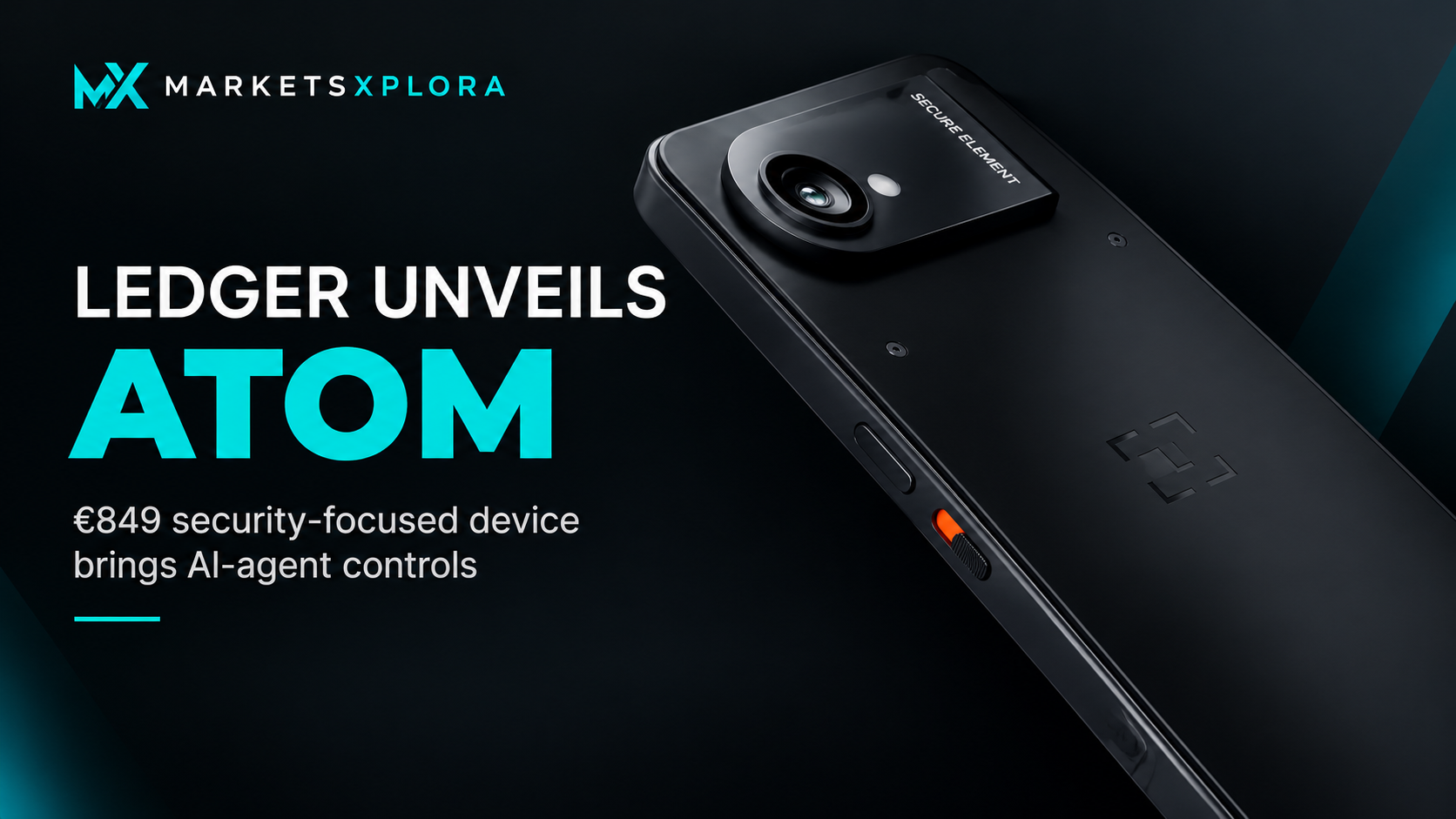
- Ledger has unveiled Atom, a security-focused mobile device designed to protect crypto transactions, digital identity and AI-agent activity.
- The launch comes days after a hardware-implant attack involving Ledger wallets sold through reseller CryptoBilis raised fresh concerns about the security of the hardware-wallet supply chain.
Ledger Chairman and CEO Pascal Gauthier introduced Ledger Atom at Ledger Op3n 2026 on October 15, presenting it as a new direction for the company beyond securing cryptocurrency.
The device combines everyday apps with Ledger’s security architecture, including a separate Secure Element, a dedicated secure screen and Ledger OS. Ledger says the design will extend hardware-backed protection to digital identity, communications and approvals for AI agents.
But the timing gives Atom’s security claims added significance. Ledger is introducing new physical tamper protections while investigating an incident in which criminals reportedly modified genuine Ledger devices after they left the company’s control and returned them to circulation through a reseller.
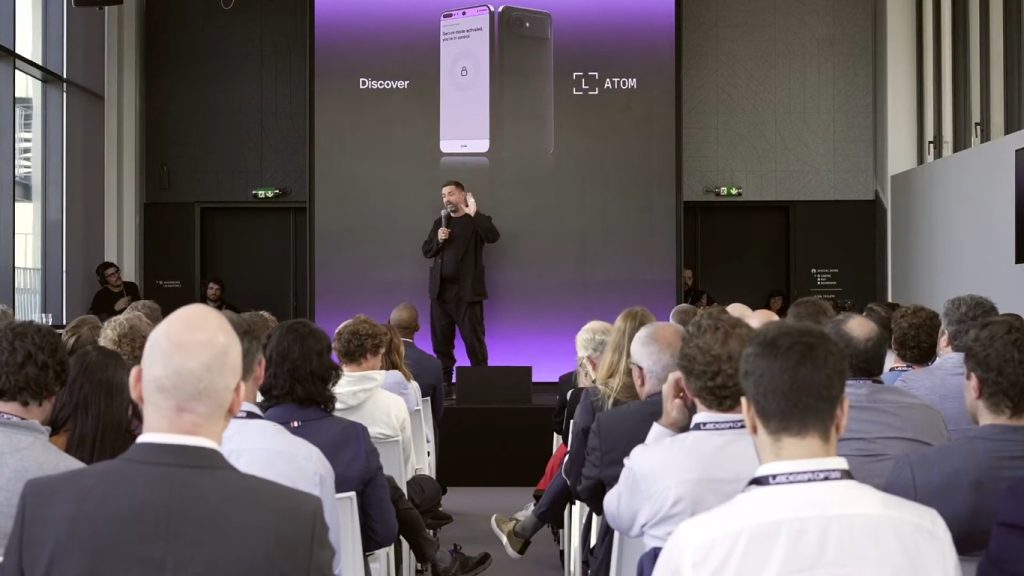
Ledger Atom introduces a new security architecture
Atom runs everyday applications in a standard operating environment based on the Android Open Source Project, alongside Ledger OS, which runs on a separate Secure Element.
According to Ledger, the two environments operate separately. When a sensitive action requires approval, the device enters Secure Mode, allowing Ledger OS to control the screen where the user reviews the request.
Atom also includes a physical privacy switch that cuts power to its camera and microphone at circuit level, according to the company.
Another announced feature is an active shield around the device’s secure zone. Ledger says the shield is designed to detect attempts to touch, open, probe or modify the protected hardware, triggering a response from the Secure Element.
These protections are central to Ledger’s ambition to make Atom a platform for more than crypto transactions. However, the device remains in development, and the effectiveness of its new tamper-detection system has not yet been independently established in a finished retail product.
CryptoBilis incident highlights the supply-chain challenge
The announcement follows reports of a hardware-implant attack involving Ledger devices sold through CryptoBilis, a reseller operating in Southeast Asia.
According to Ledger’s incident statement, criminals purchased genuine devices, opened them, installed hidden components designed to capture recovery phrases during setup, and returned the modified products to distribution. The stolen phrases could then be used to access victims’ crypto assets.
Ledger said its Secure Element, operating system and servers were not compromised. It described the incident as an attack on the distribution channel after the affected devices had left its control.
The incident illustrates a critical limitation of hardware-wallet security: a secure chip cannot, by itself, guarantee that a device has not been physically modified before it reaches its owner. In the CryptoBilis case, the reported implant was designed to capture recovery phrases displayed during setup rather than compromise Ledger’s underlying Secure Element.
Ledger has said it is tightening controls on its authorised distribution network and has asked resellers and distributors in affected markets to suspend sales while it investigates.
Atom’s active shield is relevant to this problem because Ledger says it is designed to detect attempts to interfere physically with the secure zone. However, the company has not established that the new system would have prevented the specific CryptoBilis attack. That question will require technical evidence and independent testing of the finished device.
The incident also makes the distinction between a product’s internal security and its distribution chain particularly important. Buyers must be able to trust not only the security architecture but also the integrity of the hardware they receive.
Kraken parent Payward explores secure transaction approvals
Ledger also announced plans to expand its partnership with Payward, the parent company of cryptocurrency exchange Kraken.
The companies are exploring integrations between Atom and the exchange experience that would allow users to sign sensitive transactions on Atom’s secure screen. The integration is not yet described as a completed product feature.
David Ripley, Co-CEO of Payward, said the partnership reflects a shared emphasis on security as more financial activity moves onchain.
“Security isn’t a feature you add. It’s the foundation everything else is built on,” Ripley said.
Ledger Wallet will be available natively on Atom, enabling users to buy, sell, swap and generate yield through third-party services without needing to connect a separate signer by cable.
The proposed Payward integration would take the concept further by bringing hardware-backed transaction approval closer to the exchange experience. The companies have not yet confirmed when the integration will become available.
Solana Mobile brings its app ecosystem to Atom
Ledger has also announced a partnership with Solana Mobile. The collaboration builds on the expansion of Solana’s crypto-focused mobile ecosystem, which includes the Seeker device and its decentralised application store.
Anatoly Yakovenko, Co-Founder and CEO of Solana Labs, said the partnership would extend the Solana Mobile ecosystem to Ledger Atom users.
“The Seeker phone proved what a crypto-native mobile community can do,” Yakovenko said, pointing to its apps, transaction activity and user community.
The partnership could give developers another way to reach crypto users while combining access to decentralised applications with Ledger’s transaction-security architecture.
The final availability of individual apps will depend on the device’s launch configuration and applicable certification and licensing requirements.
Cyber50 partnership targets secure communications
Ledger named Cyber50 Defense, which works on securing business and government communications in the United Arab Emirates, as an Atom launch partner.
The collaboration will explore how hardware-backed security could strengthen privacy and protect sensitive communications.
Abdulla Bader al Seiari, CEO of Cyber50 Defense, said the partnership would examine how the technology could support more resilient digital infrastructure.
“Secure communication requires trust to be built into every layer,” al Seiari said.
Ledger says Atom is designed to keep messaging keys within the Secure Element, with encrypted messages intended to remain unreadable outside the secure environment. The company describes a model in which only the intended recipient, using another Atom, can decrypt a protected message.
This capability is part of Ledger’s broader plan to extend hardware-backed security into communications. Its practical protection will depend on the final implementation and the applications that support it.
Ledger expands into AI agents and digital identity
Atom will also integrate Ledger Agent Intent, which provides a shared interface for reviewing requests generated by compatible AI agents.
Agents can prepare actions, such as proposed crypto transactions, but users can review and approve requests through a compatible Ledger signer. Ledger says Agent Intent can also work with existing compatible devices, rather than requiring Atom.
The company has announced Persona as its first identity-verification partner. The intended use cases include proving attributes such as age or identity without disclosing more personal information than a service needs.
Other planned applications include passkeys, secure corporate logins and multifactor authentication.
These features reflect Ledger’s ambition to protect not only crypto assets but also the credentials, communications and permissions that increasingly shape users’ digital lives. However, AI agents and transaction services remain third-party offerings, and an approval mechanism does not automatically make an agent’s recommendations safe.
Ledger Atom price and availability
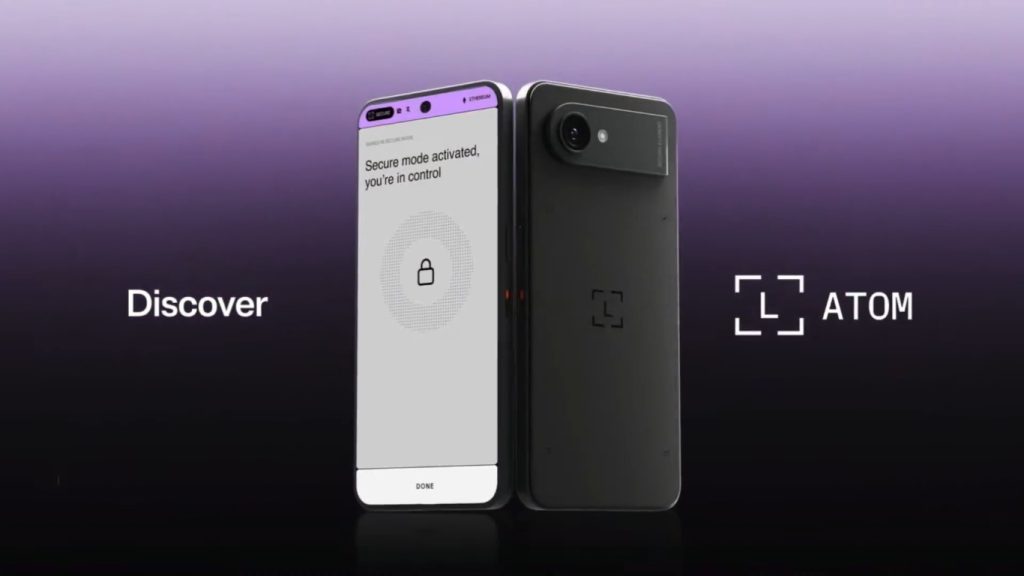
Ledger is accepting reservations for the Atom Founders Edition at a special reserve price of $849, with a fully refundable $100 deposit.
Delivery is estimated for Q2 2027. Ledger warns that the device is still in development and that its specifications, features, design and price may change before launch.
The device has a 6.77-inch AMOLED display, a 4,000mAh battery, front and rear cameras, and data-only eSIM connectivity. It does not support conventional cellular voice calls or SMS.
Ledger says app availability will depend on certification and licensing, with supported features to be confirmed before the device ships.