

Quick answer: There’s no single “best” crypto wallet — it depends on whether you prioritize open-source transparency (Trezor Safe 3/5/7, Keycard Shell), the simplest possible setup (Tangem Wallet, Tangem Ring), the richest ecosystem and app support (Ledger Flex, Stax, Nano X), or multisig without a seed phrase (Bitkey).
Below we compare 12 hardware wallets side by side on price, security certification, backup method, and connectivity — including an honest look at each brand’s security track record, which matters as much as the spec sheet.
Last updated: July 2026 · By Samson Ononeme, Financial Content Strategist & Crypto/Web3 Researcher · See our methodology · Affiliate disclosure
Best Crypto Wallet for Every Type of User
Category |
Our Pick |
Why |
|---|---|---|
Best overall / premium open-source |
Trezor Safe 7 |
Fully open-source, post-quantum firmware signing, IP-rated aluminum build |
Simplest setup / beginners |
Tangem Wallet |
No seed phrase to write down — tap-to-use card with multi-card backup |
Budget entry point |
Trezor Safe 3 / Ledger Nano S Plus |
Both $79 with a genuine secure element, no shortcuts on core security |
Richest app ecosystem |
Ledger Flex / Nano X |
Ledger Live supports the widest range of coins, staking, and DApp connections |
Wearable / most portable |
Tangem Ring |
Cold storage that fits on your finger — no card to carry or misplace |
Premium design / display |
Ledger Stax |
Largest E Ink touchscreen of any device here, doubles as an NFT display |
Multisig without a seed phrase |
Bitkey |
2-of-3 multisig across app, device, and Block’s server — no phrase to lose |
Full Crypto Wallet Comparison Table (2026)
Prices reflect standard single-unit US pricing as of July 2026 and can vary by region, bundle, and promotion — always buy directly from the official manufacturer site. Ledger’s lineup now spans four tiers with the addition of the Nano Gen5, its newest flagship signer.
Wallet |
Price |
Security |
Screen / Backup |
Connectivity |
Best For |
|---|---|---|---|---|---|
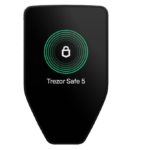
$249 |
EAL6+ (TROPIC01), post-quantum firmware signing, fully open-source |
2.5″ color touchscreen; Shamir/Multi-share backup |
USB-C, wireless charging |
Best overall open-source pick |
|
$169 |
Secure element, fully open-source (hardware & software) |
Color touchscreen; Shamir backup |
USB-C |
Mid-range open-source option |
|
$79 |
EAL6+ secure element, fully open-source |
Small screen; Shamir Secret Sharing |
USB-C |
Budget open-source entry point |
|
$179 |
EAL6+ secure element, closed-source firmware |
2.76″ monochrome E Ink touchscreen with Clear Signing; includes Ledger Recovery Key |
Bluetooth 5.2, NFC, USB-C |
Newest Ledger flagship, on-device transaction verification |
|
$399 |
EAL6+ secure element, closed-source firmware |
3.7″ curved E Ink touchscreen; 24-word recovery phrase |
Bluetooth, wireless charging, NFC |
Premium design & NFT display |
|
$249 |
EAL6+ (ST33K1M5), secure element directly powers screen |
2.84″ E Ink touchscreen; 24-word recovery phrase |
Bluetooth, USB-C |
Best screen tech at mid-premium price |
|
$149 |
EAL5+ (ST33J2M0), closed-source firmware |
Small monochrome screen; 24-word recovery phrase |
Bluetooth, USB-C |
Mobile use on a mid-range budget |
|
$79 |
EAL5+, closed-source firmware |
Small monochrome screen; 24-word recovery phrase |
USB-C only |
Cheapest Ledger entry point |
|
$54.90 (2-card) / $69.90 (3-card) |
EAL6+ secure chip, no firmware updates by design |
No screen; multi-card backup, no seed phrase |
NFC only |
Simplest possible setup |
|
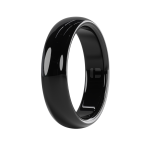
$160 (ring + 2-card combo) |
Same EAL6+ chip as Tangem Wallet |
No screen; card-based backup, no seed phrase |
NFC only |
Wearable, most portable option |
|
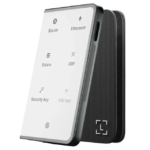
~$120–160 (varies by region/bundle) |
EAL6+ secure element, fully open-source |
1.8″ OLED + keypad + QR camera; keycard-based backup |
NFC, USB-C (optional) |
Open-source modular design |
|
$150 |
Secure boot enforced hardware, source-available (not fully open-source) |
No traditional seed phrase; 2-of-3 multisig (app/device/server) |
Bluetooth (via companion app) |
Multisig without seed-phrase management |







Security Certification & Brand Track Record
A spec sheet doesn’t tell the whole story. Here’s what the certification levels actually mean, and each brand’s honest security history:
Brand |
Firmware |
Known Incidents |
|---|---|---|
Ledger |
Closed-source |
2020 e-commerce database breach exposed 272,000+ customer addresses; 2023 Connect Kit supply-chain attack drained funds from connected apps; a further 2026 breach via a third-party order processor exposed customer data. No wallet firmware itself has been compromised — all incidents involved customer data or software supply chain, not the secure element. |
Trezor |
Fully open-source (hardware & software) |
A 2024 phishing campaign exploited a third-party newsletter breach to target Trezor customers via email, not the devices themselves. No device-level compromise on record. |
Tangem |
Closed, non-updatable by design |
No public breach on record as of July 2026. The lack of firmware updates removes a common attack vector, but also means no post-purchase security patches are possible. |
Keycard |
Open-source |
No public breach on record; newer to the market with a smaller install base than Ledger or Trezor. |
Bitkey (Block) |
Source-available (not fully open-source) |
No public device-level breach on record as of July 2026. |
Open-source vs. closed-source isn’t just a philosophy debate. Open-source firmware (Trezor, Keycard) can be independently audited by anyone; closed-source firmware (Ledger, Tangem) relies on the manufacturer’s own security claims and third-party certification. Neither approach has a perfect track record — Ledger’s incidents have been about company data and software, not the secure element itself — but it’s worth weighing which trust model you’re more comfortable with before buying.
What Do EAL5+ and EAL6+ Actually Mean?
Common Criteria Evaluation Assurance Levels (EAL) rate how rigorously a secure chip’s security claims have been independently tested. EAL5+ involves semi-formal design verification; EAL6+ adds semi-formal verification of the implementation itself, a meaningfully higher bar. In practice, both levels are considered strong for consumer hardware wallets — the certification matters less than whether the rest of the device (firmware, backup method, supply chain) matches that same standard.
Head-to-Head Wallet Comparisons
Want a direct side-by-side instead of the full table? These in-depth comparisons cover setup, security, and real-world usability:
- Trezor Safe 3 vs Ledger Nano S Plus
- Trezor Safe 7 vs Ledger Flex
- Bitkey vs Trezor Safe 3
- Ledger Flex vs Ledger Nano X
- Tangem vs Ledger Stax
- Tangem vs Trezor Safe 5
- Tangem vs Ledger Flex
- Keycard Shell vs Tangem
- Ledger Stax vs Ledger Flex
- Bitkey vs Ledger Nano S Plus
- Ledger Nano Gen5 vs Ledger Flex
- Ledger Nano Gen5 vs Ledger Stax
Our Methodology
We compare hardware wallets across five pillars: security certification and firmware transparency (open-source vs. closed-source, EAL rating), backup and recovery method, connectivity and app ecosystem, build quality and durability, and manufacturer security track record. Specifications are pulled from official manufacturer documentation and cross-checked against independent teardown and security research; brand incident history is drawn from public reporting and re-verified on a rolling basis.
Before You Buy: Verification Checklist
- Buy only from the official manufacturer site or an explicitly authorized reseller — never a third-party marketplace listing, to avoid tampered devices.
- Verify the device arrives with an intact tamper-evident seal and generates its own recovery phrase or backup on first setup — never accept a pre-generated seed.
- Decide whether open-source firmware (independently auditable) or a longer market track record matters more to you — neither guarantees safety on its own.
- Confirm the device supports the specific coins and networks you actually hold before buying, not just “thousands of assets” marketing copy.
- Write down or store your backup method immediately and offline — a wallet is only as secure as its weakest-protected backup.
Frequently Asked Questions
What’s the safest crypto wallet in 2026?
Trezor Safe 7 currently offers the strongest combination of open-source transparency, a high-assurance secure element, and post-quantum firmware signing. Tangem Wallet and Keycard Shell are close alternatives for buyers who prioritize a simpler or fully auditable design over Trezor’s touchscreen interface.
Is Ledger safe to use despite its past data breaches?
Ledger’s known incidents — the 2020 and 2026 data breaches and the 2023 Connect Kit attack — involved customer data and software supply chain issues, not a compromise of the secure element inside the device itself. Funds in cold storage on a Ledger device were not directly exposed by these incidents, though the breaches did expose customers to targeted phishing risk.
Do I need a seed phrase with every hardware wallet?
No. Tangem Wallet and Tangem Ring use card-based backup instead of a written seed phrase, and Bitkey uses a 2-of-3 multisig model across app, device, and a Block-operated server. Trezor, Ledger, and Keycard Shell all use a traditional recovery phrase or Shamir-style backup.
What’s the cheapest reliable hardware wallet?
Trezor Safe 3 and Ledger Nano S Plus are both $79 and include a genuine secure element without cutting corners on core security — a solid entry point before spending more for a bigger screen or wireless connectivity.
What does EAL6+ mean compared to EAL5+?
Both are Common Criteria security certification levels for a chip’s secure element. EAL6+ requires semi-formal verification of the actual implementation, a meaningfully higher bar than EAL5+’s semi-formal design verification alone — though both are considered strong for consumer hardware wallets.
Affiliate Disclosure: MarketsXplora may earn a commission if you purchase a wallet through some of the links on this page. This does not affect our rankings or the accuracy of the information provided. See our full editorial policy for details.
Security Note: Always purchase hardware wallets directly from the official manufacturer or an authorized reseller. Never enter an existing recovery phrase into a new device, and never share your recovery phrase or seed with anyone, including support staff claiming to represent the manufacturer.