


Tangem vs. Ledger Stax— which one makes more sense for someone just starting out? If you’re new to cold wallets, the options can feel overwhelming. One works with just a tap of your phone, the other is trusted by millions worldwide. But which one fits you? In this guide, we walk you through both wallets side by side — the features, the feel, and what real users are saying — to help you decide with zero stress.
Tangem vs Ledger Stax: Quick Specs at a Glance
Both wallets promise security and peace of mind — but which one is right for you? To make your decision easier, let’s break down the key specs side-by-side:

Tangem Wallet |
Ledger Stax |
|
|---|---|---|
Price |
$54.90 |
$399 |
Display |
None (uses phone screen) |
3.7” Curved E Ink® Touchscreen |
Battery |
No battery required |
Rechargeable (up to 10 hrs in use) |
Security Certification |
EAL6+ |
CC EAL6+ |
Recovery Options |
Multiple cards, optional seed phrase |
24-word seed phrase + Ledger Recover |
Crypto Support |
6,000+ tokens |
5,500+ tokens |
NFT Support |
Limited (via external apps) |
Native Ethereum & Polygon NFT support |
Mobile Compatibility |
iOS & Android |
iOS, Android, Windows, Mac, Linux |
Durability |
Waterproof, dustproof, zero moving parts |
Durable build, not waterproof |
Weight |
6g |
45.2g |
At first glance, the differences are pretty clear — Tangem leans on minimalism and practicality, while Ledger Stax is all about advanced features and a premium feel. But specs alone don’t tell the whole story. Let’s dive deeper, starting with one of the most obvious points of contrast: how they’re built and how they feel in your hands.
What Is Tangem Wallet?
Tangem Wallet is a next-generation cold storage hardware wallet that looks and feels just like a bank card — only much smarter. Born in Switzerland and first launched in 2018, Tangem set out to simplify crypto security for everyone. Unlike typical wallets that require seed phrases or complicated setups, Tangem lets you manage your crypto with just a tap — no charging, no cables, no stress. It’s designed to work entirely offline, making it immune to online hacks that hot wallets often fall victim to.
The wallet utilizes a Samsung-made EAL6+ certified chip, providing top-tier protection typically found in biometric passports. Whether you choose classic black or go for custom limited-edition colors, Tangem blends form and function beautifully. If you’re curious how this sleek little card holds up in the real world, check out our full Tangem Wallet review.
What Is Ledger Stax?
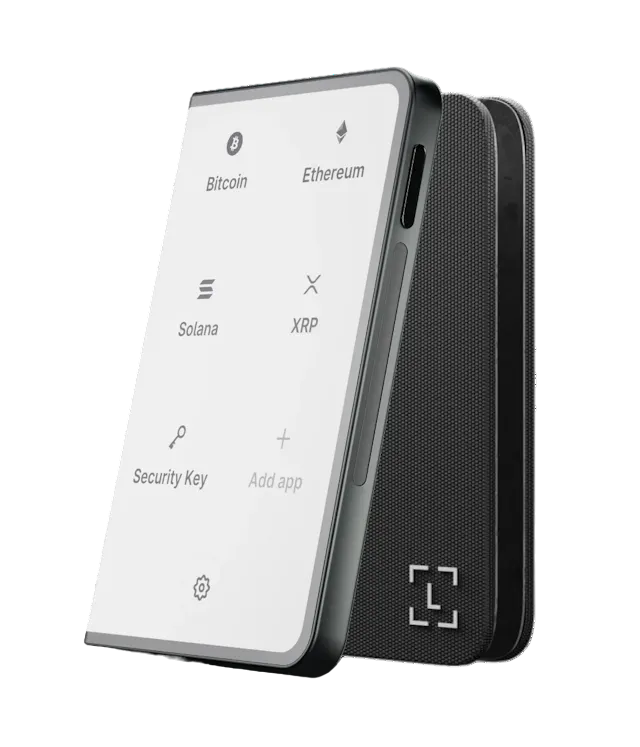
Ledger Stax is the latest premium cold wallet from France-based Ledger, a pioneer in crypto security since 2014. Released in early 2024, it was co-designed by Tony Fadell, the man behind the iPod, and it shows. Ledger Stax is a high-end hardware wallet with a curved E Ink touchscreen, a rechargeable battery, and wireless connectivity — all packed into a compact, smartphone-like design.
Like Tangem, Stax is a cold wallet, meaning your private keys never touch the internet, unlike hot wallets that are always online and vulnerable to hacks. It supports Bluetooth, has custom lock screen options, and is available in its signature clean silver finish. If you want to see what it’s like to hold innovation in your hand, check out our full Ledger Stax review.
Tangem vs Ledger Stax: Design & Portability
Tangem looks and feels like a standard bank card, but it’s anything but ordinary. It’s ultra-light at just 6 grams, 1mm thick, and fits right into your wallet, phone case, or even on a keychain using its ring companion. It has no screen, no buttons, no battery — just a secure NFC chip sealed inside a durable shell that’s waterproof, dustproof, and resistant to extreme environments. This isn’t just a backup wallet — for many users, Tangem is the main wallet because it’s designed to go wherever you do.
 Ledger Stax, on the other hand, feels more like a luxury tech gadget. It’s about the size of five stacked credit cards, weighing in at 45.2g. It features an elegant curved E Ink touchscreen that stays visible even when the device is off — a standout for NFT collectors and users who want transaction details shown clearly before approval. It charges wirelessly, has built-in magnets that let you “stack” multiple devices, and includes a Magnet Shell case in the box for extra protection.
So, in terms of portability — Tangem wins on size, weight, and durability, making it perfect for travel or daily carry. But if you’re looking for a more immersive, screen-based experience that feels modern and tactile, Ledger Stax delivers that with flair.
Display & User Experience
When it comes to user experience, the difference is like night and day. Tangem keeps things ultra-simple by skipping the screen entirely.
Instead, you tap the card to your smartphone, and the Tangem app becomes your interface.
Everything — from viewing balances to approving transactions — happens through the app, which is smooth, minimal, and packed with useful features like swapping, staking, and price tracking. It feels more like using a mobile banking app than a hardware wallet.
Ledger Stax, meanwhile, gives you a full-blown visual experience right on the device itself. Its standout feature is the curved 3.7” E Ink® touchscreen, which lets you clear-sign transactions — meaning you can see the full transaction details in human-readable language directly on the device before approving. This level of clarity adds a powerful layer of trust and control, especially for those who handle large transfers or interact with smart contracts. And since the E Ink display stays visible even when the device is off, you can customize the screen with your favorite NFT or image for a personal touch.
So if you prefer using your phone as a control hub and want to travel light, Tangem feels fast and intuitive. But if you’re someone who values visual confirmation and a more tactile, standalone experience, Ledger Stax offers a premium level of interaction.
Tangem vs Ledger Stax: Security & Recovery
No matter how beautiful a wallet looks, security is what matters most — and both devices bring serious firepower to the table.
Tangem is all about chip-level protection. It generates your private key offline inside the chip itself during setup, and that key never leaves the device, ever. The chip — developed with Samsung Semiconductors — is EAL6+ certified, just like biometric passports. You can also choose a 2- or 3-card set, giving you built-in redundancy: lose one, and you still have access with the others. There’s also optional seed phrase support if you prefer that traditional method. Add in access code protection and biometric security, and you get a wallet that’s battle-tested in every way.
Ledger Stax matches that commitment to safety with its own CC EAL6+ certified Secure Element chip and Ledger OS, built to isolate your private key from internet-connected devices.
You control the device with a PIN code, and after three wrong attempts, it wipes itself clean. What gives Ledger Stax an edge for some users is Ledger Recover, an optional paid service that lets you back up your seed phrase to the cloud — encrypted, split, and stored with trusted providers. While some purists prefer full manual control, others love the convenience of cloud-assisted recovery.
Both wallets are highly secure, but they differ in philosophy. Tangem prioritizes physical redundancy and offline key storage, while Ledger Stax blends top-tier hardware with modern recovery options.

Ease of Use & Setup
Security is great — but only if the device is actually usable. And here’s where Tangem shines.
Setting up Tangem is ridiculously fast. You just tap the card to your phone, set a passcode, and you’re ready to manage crypto. It takes less than 3 minutes from unboxing to transacting. There are no firmware updates, no cables, and no app bloat — just clean, straightforward functionality. That makes Tangem a favorite among beginners, casual users, and even experienced holders looking for a quick-to-deploy backup wallet.
Ledger Stax takes a bit longer to set up but rewards you with a more in-depth experience. You’ll go through steps like choosing your PIN, writing down your 24-word recovery phrase, connecting to Ledger Live, and installing apps for each coin you want to manage. The process is guided and polished, but it can feel overwhelming for someone new to crypto. Still, once everything’s up and running, you get a powerful ecosystem with lots of flexibility — and the Bluetooth support makes mobile use easier than ever.
If you’re looking for speed, simplicity, and zero-maintenance setup, Tangem is hands-down the winner. But if you don’t mind a bit of extra time for a richer, feature-packed environment, Ledger Stax won’t disappoint.
App & Software Ecosystem
A hardware wallet is only as good as the software behind it — and both Tangem and Ledger deliver solid companion apps, but in very different ways.
Tangem relies entirely on its Tangem App, which serves as your command center. It’s clean, snappy, and beginner-friendly. You can buy, sell, stake, and swap crypto with just a few taps, and the app supports over 6,000 tokens. It also includes real-time price tracking and token analytics, which is a nice touch for anyone watching the markets. There’s no syncing with a desktop — everything is mobile-based, which works perfectly for users who are always on the go.
Ledger, in contrast, offers a much more expansive ecosystem. The Ledger Live app (available on both desktop and mobile) is a powerful interface where you can manage your portfolio, stake dozens of assets, track your NFTs, install wallet apps, and even connect to third-party DeFi services. It’s more than just a wallet companion — it feels like a full crypto operating system. For power users, the depth and versatility of Ledger Live are hard to beat.
So if you want something minimal, easy, and mobile-first, Tangem’s app delivers with elegance. But if you’re managing a broader portfolio or need advanced tools, Ledger Live offers more room to grow.
Ledger Stax vs Tangem: Crypto & NFT Support
Support for tokens and NFTs is another big deciding factor — especially if you’re investing beyond just Bitcoin or Ethereum.
Tangem supports over 6,000 cryptocurrencies, including major coins and a wide range of ERC-20 and BEP-20 tokens. That’s impressive for such a minimalist wallet. However, when it comes to NFTs, Tangem doesn’t have native support in its own app. You’ll need to rely on external apps or wallets (like MetaMask or Trust Wallet) to view or manage your NFT assets, which adds an extra step to the experience.
Ledger Stax supports 5,500+ tokens natively through Ledger Live, and offers seamless NFT management for Ethereum and Polygon-based NFTs. You can browse, track, and send NFTs directly from the Ledger Live app without switching platforms. Add to that the ability to set your favorite NFT as your lock screen image, and it’s clear Ledger has gone all-in on making NFTs a first-class citizen.
If NFTs play a big role in your crypto world, Ledger Stax is the better pick. But for pure token holders or long-term HODLers, Tangem’s broad coin support has you fully covered.

Ledger Stax vs Tangem: Backup & Recovery Options
When it comes to protecting access to your crypto, both wallets offer reliable — but very different — backup solutions.
Tangem gives you options. You can choose a 2-card or 3-card setup, where each card acts like a clone key to your wallet. Lose one card? No problem — the others still unlock your funds. This physical redundancy is one of Tangem’s strongest features, especially since there’s no digital seed phrase unless you choose to create one manually. And if you want extra peace of mind, Tangem also lets you generate or import a seed phrase, giving you a hybrid between traditional and card-based recovery.
Ledger Stax takes the traditional route: you’ll set up and securely store a 24-word recovery phrase, which is your lifeline in case the device is lost or damaged. If that feels risky, Ledger now offers Ledger Recover, a paid subscription service that encrypts and splits your seed phrase into secure fragments stored with trusted partners. It’s optional, but for those who fear losing their backup, it adds an extra layer of confidence.
So, if you prefer a backup you can hold in your hand, Tangem’s multi-card system is hard to beat. But if you’re comfortable with seed phrases or cloud-assisted recovery, Ledger Stax has you well covered.
Ledger Stax vs Tangem: Battery & Durability
Hardware wallets need to be dependable, especially when you’re far from home or off the grid — and this is where Tangem and Ledger Stax show off very different strengths.
Tangem has no battery at all. That’s right — it’s powered by your phone’s NFC signal, so it’s always ready to use. No charging, no cables, no dead battery drama. Plus, its sealed, monolithic design makes it dustproof, waterproof (IP69K), and resistant to extreme temperatures, X-rays, and static discharge. It’s practically indestructible. This makes Tangem ideal for rugged environments, emergency kits, or anyone who just wants low-maintenance reliability.
Ledger Stax, on the other hand, has a built-in rechargeable battery that can last up to 10 hours of active use or several days on standby.
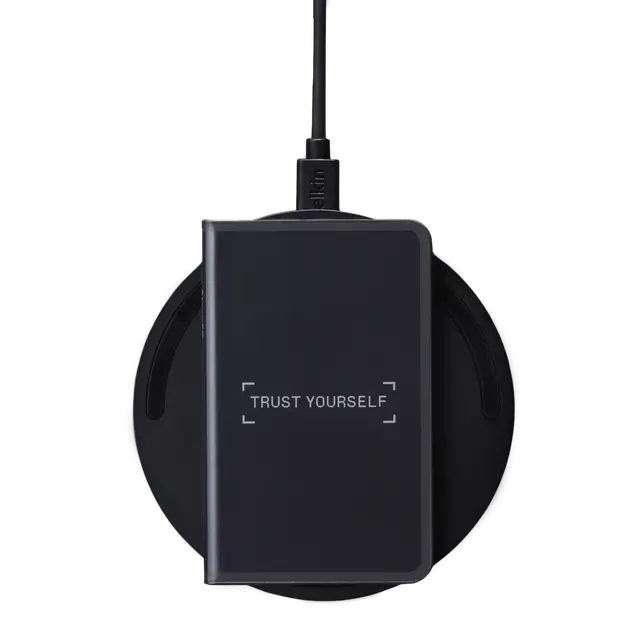
It uses E Ink® technology, which draws minimal power and stays visible even when the device is off — a smart trade-off between battery life and a rich user interface. While it’s not waterproof or ruggedized like Tangem, it’s solidly built with a graphite finish and embedded magnets for a sleek, durable look.
So if you’re someone who travels often or just wants a wallet that works every time, no matter what, Tangem wins with its zero-maintenance durability. But if you prefer a more interactive device with visual feedback, and you’re okay with occasional charging, Ledger Stax holds its ground beautifully.
Ledger Stax vs Tangem: Price & Value
Let’s talk numbers — because your choice ultimately has to make sense for your budget.
Tangem starts at just $54.90 for a 2-card set and goes up to $160 for the Tangem Ring combo. That makes it one of the most affordable hardware wallets on the market, especially considering the EAL6+ chip, 25-year durability, and multi-card redundancy. For under $70, you get a full cold storage solution with zero ongoing costs.
Ledger Stax, on the other hand, is priced at $399. It’s positioned as a premium device — and rightly so. You’re paying for a custom E Ink® touchscreen, wireless charging, Bluetooth connectivity, Ledger Live integration, and a sleek, stackable design. It also includes the Ledger Magnet Shell case, which adds value out of the box.
In terms of value for money, Tangem is unbeatable for users who want robust, mobile-friendly security without breaking the bank. But if you’re a serious investor, NFT enthusiast, or someone who wants a wallet that doubles as a digital art frame, Ledger Stax justifies its price with cutting-edge features and an elite experience.
✅ Tangem Wallet: Pros & Cons
Pros:
-
💳 Slim and portable – fits in your wallet like a credit card
-
🔋 No battery needed – always ready to use
-
🛡️ EAL6+ chip-level security (same as biometric passports)
-
🔐 Seedless setup option – no need to store or memorize recovery phrases
-
📱 Works with iOS and Android via NFC tap
-
📦 Comes in 2- or 3-card sets for better backup and recovery
-
🌈 Stylish, minimalist design available in various editions
Cons:
-
📵 No screen – all interactions are through your phone
-
🧠 Seedless recovery isn’t for everyone – losing all cards = lost access
-
🧊 Limited community trust compared to older brands
-
📈 Not ideal for advanced DeFi users or multisig setups
✅ Ledger Stax: Pros & Cons
Pros:
-
📱 E Ink touchscreen – view your portfolio, sign transactions on-device
-
🧑🎨 Designed by Apple iPod creator – premium feel and build
-
🔐 Cold storage with full support for over 5000+ coins and NFTs
-
🔋 Rechargeable battery with wireless Qi charging support
-
📲 Bluetooth-enabled – manage assets from your phone or laptop
-
💼 Trusted brand with long-standing reputation in the crypto space
Cons:
-
💰 Expensive – one of the priciest wallets on the market (~$399)
-
⚡ Needs charging – battery must be maintained
-
📦 Bulkier than card wallets – not as pocket-friendly
Ledger Stax or Tangem? Which Should You Choose?
Now the big question: Which wallet is right for you?
Choose Tangem if you want a wallet that’s:
- Simple, fast, and beginner-friendly
- Ultra-portable and maintenance-free
- Rugged enough to survive anything
- Affordable, even for multiple users (family or team wallets)
- Great for mobile-first crypto holders
Tangem is ideal for everyday users, travelers, or anyone who wants a “set-it-and-forget-it” experience with top-tier security baked in.
Choose Ledger Stax if you’re looking for:
- A premium touchscreen experience
- Visual confirmation of every transaction
- Native NFT support and personalization
- A powerful app ecosystem via Ledger Live
- Recovery options like Ledger Recover
- A wallet that feels more like a luxury tech device
Ledger Stax is perfect for crypto power users, collectors, and those who value both aesthetics and advanced control.
What Reddit Users Are Saying About Ledger Stax and Tangem
If you want the real scoop, crypto communities on Reddit are never shy with opinions — and the Tangem vs. Ledger Stax debate is alive and buzzing.
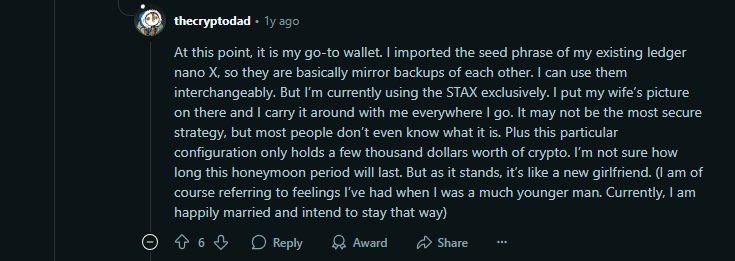
On one side, you’ve got users who absolutely love it. They can’t get enough of the sleek touchscreen, calling the new design a major upgrade.
“It’s like a new girlfriend,” joked @thecryptodad who now uses it every day.
But not everyone’s impressed. Some bring up Ledger’s past missteps, like dropping support for the Ledger Blue or the backlash from its cloud-based recovery feature.
“If Stax doesn’t sell well, it might turn into a $399 brick,” warned @peeping_somnambulist.

Plenty of long-time holders still stick with what works — the Ledger Nano S Plus. They love that it’s simple, durable, and doesn’t rely on a battery.
“I don’t need a fancy screen. I just want something reliable.”

Now flip the conversation and you’ll see Tangem stirring up its own buzz — for very different reasons.
Fans of Tangem are all about the tap-and-go design and the fact that there’s no seed phrase to worry about.
“It’s the only one I trust after losing a seed phrase,” said one relieved user who now swears by the 3-card setup.
But not everyone is convinced. Some are still cautious after an older controversy involving seed phrases being exposed in support tickets. While Tangem has since added optional seed phrase support and tightened up security, some doubts still linger.
“Great wallet — until one of the cards fails,” one person warned.

Still, many agree: if you’re going seedless, you need to be smart about it — keep all three cards safe, and have a solid backup plan in place.
Across the board, as you can see, both wallets have solid communities backing them. But it really comes down to what you prioritize: simplicity or sophistication.
Tangem vs Ledger Stax: 🛍️ Where (and How) to Buy
So, you’ve made up your mind—or you’re pretty close. Whether you’re leaning toward the Tangem Wallet or the Ledger Stax, one thing is crystal clear: always buy from the official source.
If you’re going for the Ledger Stax, don’t take chances with third-party sellers. Ordering directly from the official Ledger website guarantees that your device hasn’t been tampered with — a crucial detail when it comes to protecting your crypto. One user shared a horror story about receiving a wallet from an unverified reseller that showed signs of tampering. It’s just not worth the risk. Buying from Ledger.com also comes with perks: free standard shipping (arrives in 15–30 days), or you can upgrade to express delivery (FedEx, DHL, UPS) and get it in just 5–8 days. Just be aware of possible import taxes, like a ~$28 tariff in some countries.
Best of all? You’re covered by a warranty and tech support for up to 3 years, and their customer service is responsive and helpful if you ever get stuck. You can also pay however you like — Visa, PayPal, Crypto.com Pay, BitPay, Google Pay, and more.
Prefer the Tangem Wallet? You’re in for a smooth ride. Head to the official Tangem store and order directly. Delivery typically takes 8–17 business days, depending on where you live. Even better, you can save 10% instantly by using our exclusive promo code: MARKETSXPLORA at checkout. Tangem ships globally, and you’ll receive a set of two or three cards with no batteries, no fuss — just tap and go.
🔒 Whether you’re Team Tangem or Team Ledger, the safest place to start is with a trusted source. Peace of mind is priceless when you’re storing crypto.
Related ↓
Tangem vs Ledger Nano X: Which Is Best for Beginners?
Tangem vs Ledger Flex: What’s the Real Difference?
Tangem vs Ledger Nano S Plus: Which One Should You Pick?
Final Verdict
So which is the better wallet? It depends on who you are.
If you value raw security, simplicity, and affordability, Tangem is hard to beat. It’s beginner-friendly, travel-ready, and built to withstand the elements — all without a screen or a seed phrase to worry about.
But if you’re after premium aesthetics, visual control, and a rich software experience, Ledger Stax is in a league of its own. It’s made for users who want to interact with their assets in a more elegant, modern, and intuitive way — and are willing to pay for that elevated experience.
In the end, both wallets are excellent in their own lanes. The real question is: Are you more of a minimalist… or a maximalist?
FAQs
- Can I use both wallets together?
Yes. Some users actually use Tangem for mobile daily use and Ledger Stax for high-value or NFT-specific accounts.
- Which is safer — Tangem or Ledger Stax?
Both offer EAL6+ secure chips and offline key storage. Tangem removes the need for a seed phrase. Ledger gives you Clear Signing and optional recovery services. They’re both secure in different ways.
- What happens if I lose my Tangem card or Ledger Stax?
With Tangem, just use one of your backup cards. With Ledger, as long as you have your Secret Recovery Phrase, you can restore your wallet on any compatible device.
- Which one supports more coins?
Ledger Stax, via Ledger Live and third-party apps, supports 5,500+ coins and tokens. Tangem supports 6,000+ assets natively, including NFTs and DeFi tokens.
- Which is better for beginners?
Tangem wins for its tap-and-go simplicity. No apps to install, no passwords, no phrases. Just scan and transact. But Ledger Stax is still beginner-friendly if you’re comfortable with tech.