


Key Insights
-
Ledger launched the Ledger Nano Gen5, a new E-Ink touchscreen “signer” with Secure Element, Clear Signing, Bluetooth, NFC, and an included PIN-protected Ledger Recovery Key.
-
The firm rebranded Ledger Live to Ledger Wallet, positioning the stack as “signer + app” for full digital ownership.
PARIS, (MarketsXplora) — Hardware-security maker Ledger opened its annual Ledger Op3n event with a major repositioning of its consumer product line, launching a new flagship “signer” device — the Ledger Nano Gen5 — and renaming its companion application from Ledger Live to Ledger Wallet. The double announcement landed less than 24 hours after rival Trezor introduced its new Trezor Safe7 wallet.
Ledger told attendees it is moving away from the term hardware wallet, arguing the device’s real job is not to “hold” assets but to prove intent and authorize actions — effectively serving as a “signer” inside a broader digital-ownership stack.
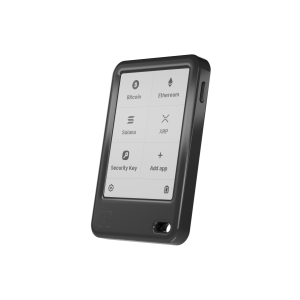
The Ledger Nano Gen5 — priced at $179 — is the company’s newest E Ink signer with Bluetooth 5.2 and USB-C connectivity. It adds Ledger’s “Clear Signing” feature to show full transaction details on-device, avoiding blind approvals. The device uses an EAL6+ certified Secure Element chip with Ledger OS to isolate private keys from connected phones or desktops.
Every box ships with a PIN-protected Ledger Recovery Key, a physical backup card designed to restore access without exposing raw seed words. The signer also supports NFC for use with the Recovery Key and with the Ledger Security Key for 2FA-style logins. It comes in a compact 46-gram build, with a scratch-resistant 400×300 E Ink screen, a 190 mAh battery rated for up to 10 hours, and 1.5MB of memory. It is compatible with iOS, Android, Windows, macOS and Ubuntu LTS, but not Chromebooks.
Ledger is also selling interchangeable badges designed by Susan Kare — billed as a nod to the classic Nano line — as optional accessories.
The Gen5 supports thousands of coins and NFTs via third-party wallets and more than 500 assets natively through Ledger Wallet, with new integrations added regularly.
Ledger Live Renamed Ledger Wallet
In parallel, Ledger has renamed Ledger Live to Ledger Wallet, casting the app as the second half of a two-part stack: signer + wallet app. Ledger Wallet provides buy, sell, send and receive functions; staking; cross-chain swaps; connections to dApps; and portfolio management. The company stressed that custodial and transactional services are provided by third-party partners and that Ledger gives no investment recommendations.
Ledger contrasted the Gen5 with both exchanges and software wallets. Assets left on exchanges require trust in a third party, while hot software wallets store keys on internet-connected systems. The Gen5 keeps keys offline in a certified Secure Element and resets after three wrong PIN attempts.
If a user loses the device, access can be restored with either the Secret Recovery Phrase or the included Ledger Recovery Key. A replacement signer — Gen5 or any other Ledger — can then recover funds.